
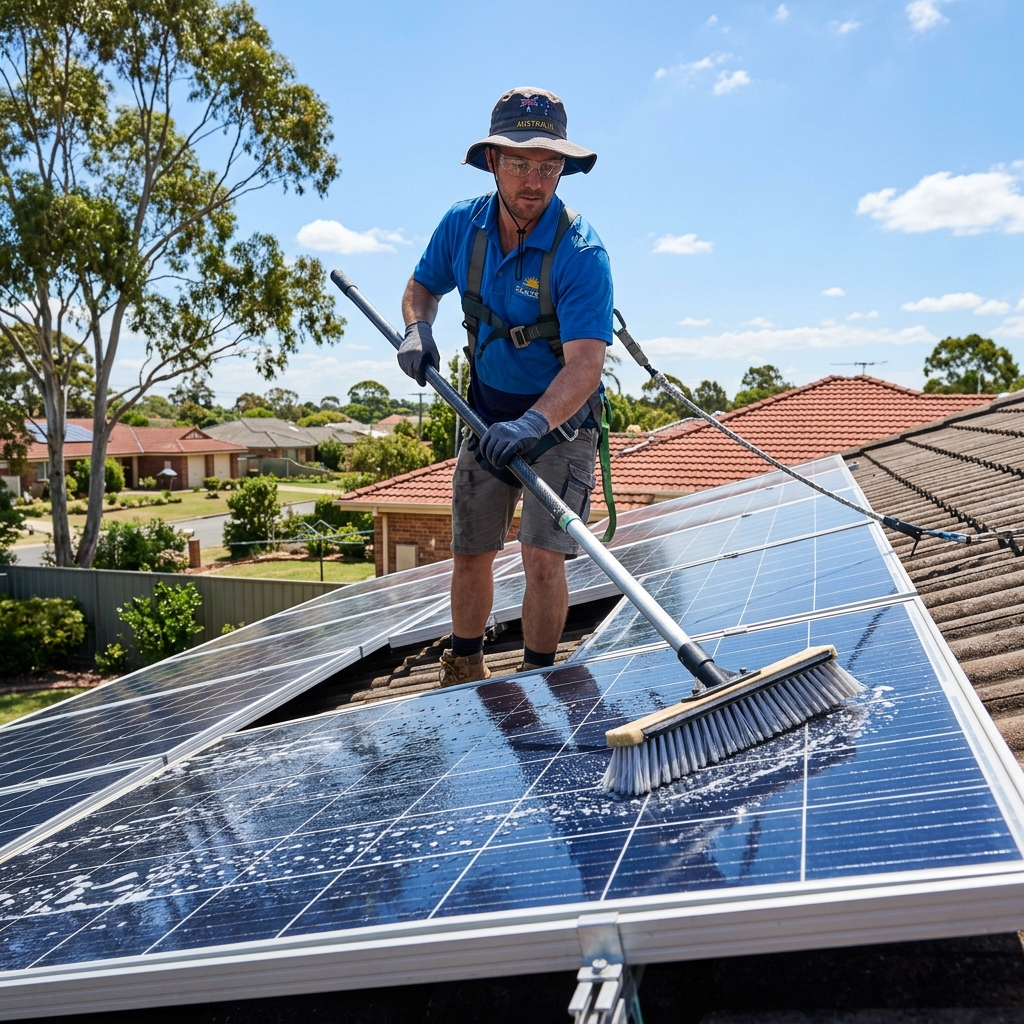
Solar panels are one of the few home investments people install and then almost never look at again. That's a problem, because unlike a roof or a driveway, dirty solar panels don't just look worse — they quietly cost you money every single day they stay dirty, in the form of electricity you paid for the system to generate but never got.
How much output can dirt actually cost you?
Studies on panel soiling consistently show that dust, pollen, and grime can reduce output anywhere from 5% to as much as 30%, depending on how dirty the panels are and how long they've gone unclean. On a typical Melbourne household system, that's easily hundreds of dollars a year in electricity you're generating less of — or buying back from the grid at retail rates instead.
Signs it's time for a clean
- A noticeable drop in your solar app's daily output — especially compared to the same time last year
- Visible dust or a hazy film across the panel surface, especially after a dry spell
- Bird droppings or leaf debris sitting on the panels — these create shaded "hot spots" that can disproportionately drag down a whole panel's output, not just the covered area
- Nearby construction, agriculture, or high traffic roads — all of which increase the rate of dust settling on your roof
- It's been 12+ months since your last clean — even without visible dirt, a light film builds up gradually and is easy to miss from ground level
Why bird droppings are worse than they look
A small patch of bird droppings might seem trivial, but solar cells are wired in series within a panel — meaning one heavily shaded cell can bottleneck the output of the entire panel, not just the small area it covers. This is one of the most common causes of an underperforming system that otherwise looks "mostly clean" from the ground.
How often should you get them cleaned?
For most Melbourne homes, once or twice a year is enough — timed around spring pollen season and after any prolonged dry, dusty stretch. Properties near busy roads, farmland, or with overhanging trees should lean toward twice yearly rather than once.
Why professional cleaning beats a garden hose
A hose from the ground rarely reaches the full panel surface and can leave mineral deposits from tap water that streak the glass. Professional cleaning uses purified water and soft brushes designed specifically for panel surfaces — enough to lift grime without scratching the anti-reflective coating that panels rely on for efficiency.
Get your solar output back
A professional clean typically pays for itself through recovered generation within months. Free quotes across Melbourne.
Get a Free Quote